High-quality vs. cheap hoodie: The ultimate quality guide 2026
Contents
Introduction: Understanding Hoodie Quality
A good hoodie is more than just a piece of clothing, especially in Switzerland, where the changeable climate, from frosty winters to cool summer evenings, demands a reliable companion. But how do you distinguish between a high-quality hoodie that lasts a long time and a cheap model that loses its shape after just a few washes?
In this guide, we show you the most important quality features: from fabric weight (GSM) to material composition, workmanship, and fit.
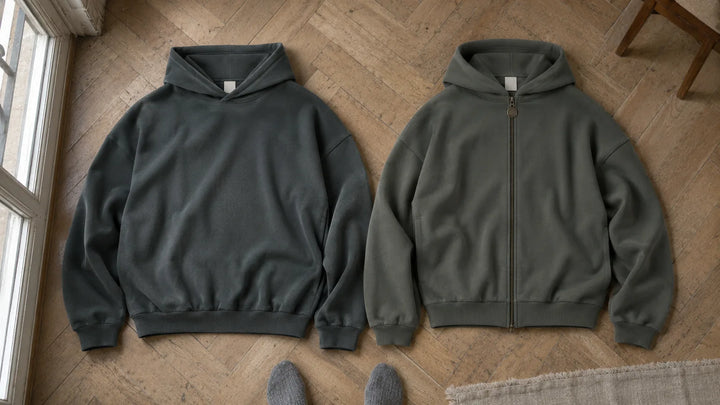
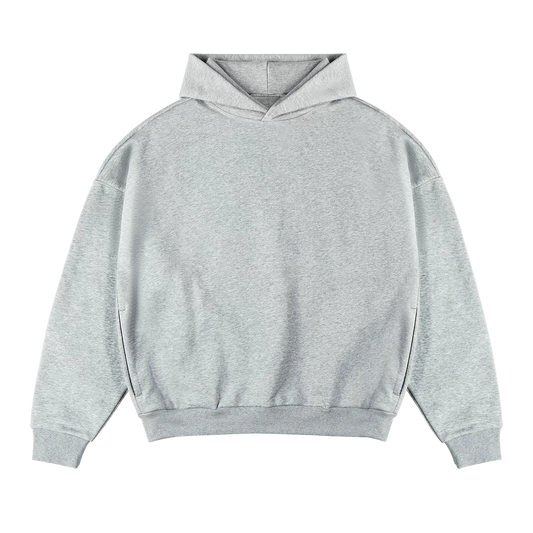
Particularly exciting: Double-layer hoodies are a rarity on the Swiss market. They essentially consist of two hoodies in one garment. This construction not only offers superior thermal insulation but also a better silhouette and longer durability.
Find out why our hoodies start at 400 GSM and discover what really matters in a durable hoodie in our ultimate heavyweight hoodie guide for Switzerland.
Cheap vs. Quality: The Key Differences
Typical features of cheap hoodies:
- Material composition: Mostly polyester with a low cotton content. Often feels synthetic and can develop an unpleasant odor when exposed to body heat.
- Fabric weight: Usually under 350 GSM (approximately 400-700 grams total weight). The fabric appears thin, allows light to pass through, and offers little structure.
- A simple test: Hold the hoodie up to the light. With cheap models, the light clearly shines through, indicating thin, low-quality fabric.
- Lint test: If you pull on the lint inside cheap hoodies, it comes off very easily. A clear sign of cheap workmanship and short-lived materials.
- Workmanship: Simple seams with only one seam line, which can tear more quickly under stress.
- Cuffs and hems: Thin cuffs that stretch out and lose their elasticity quickly.
- Colorfastness: Cheap dyeing processes can cause the color to fade significantly after only a few washes.
- Sustainability: The production of cheap hoodies is often a symptom of fast fashion, which incurs enormous social and environmental costs. Our philosophy of longevity is the conscious alternative.
Characteristics of high-quality hoodies:
- Material composition: Plenty of cotton, often with some polyester: cotton absorbs moisture, polyester makes the fabric more stable.
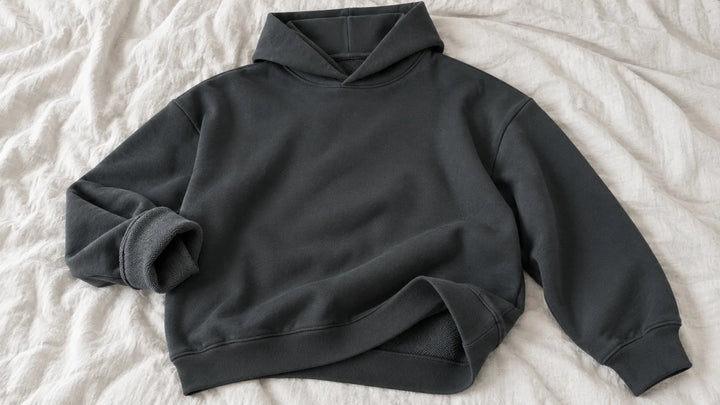
- Heavyweight quality: For us, heavyweight starts at 400 GSM. Dense, heavy fabric feels substantial and warps less.
- Precise workmanship: Double seams and four-thread overlock technology on the fabric edges prevent fraying and increase tear resistance.
- Reinforced cuffs: Elastic, thicker ribbed cuffs retain their shape for longer.
- Well-thought-out fit: Pre-washed fabric keeps the change in size after washing small, and a well-thought-out cut gives a good fit. Cotton cannot be kept from shrinking entirely.
- Durability: A dense, well-made hoodie warps less and stays wearable for longer.

Three of our hoodies at a glance
The single-layer all-rounder
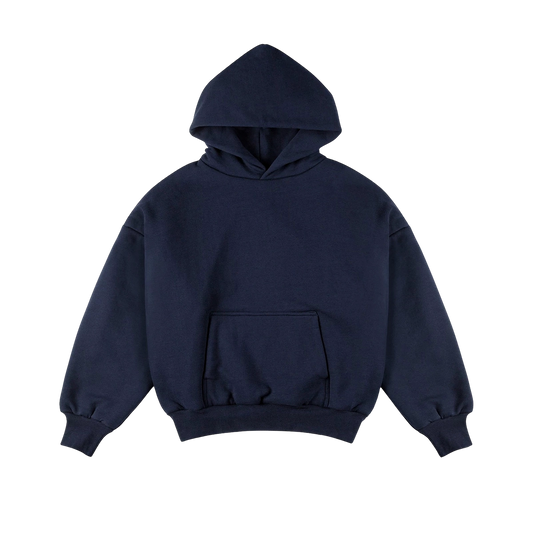
A single-layer hoodie, like our "Alltags Essential", consists of a single, thick layer of fabric. This construction is ideal for everyday use and offers:
- Lighter feel for everyday wear and milder temperatures
- Flexibility when layering (fits well under jackets)
- Comfortable to wear at temperatures from +3°C to +20°C
The double-layer winter specialists
Standard hoodies offer little protection in the Swiss winter. Our double-layered models, on the other hand, are made for -10°C to +15°C (The Gradual) and -15°C to +12°C (Zum Matterhorn) without the need for a bulky jacket:

Alltags Essential
- Construction: Single layer
- GSM: 400 g/m²
- Material: 85% cotton, 15% polyester
- Weight: approx. 700 g
- Temperature range: +3°C to +20°C
- Price: 79 CHF


The Gradual
- Construction: Double layer
- GSM: 800 g/m² (2×400)
- Material: 85% cotton, 15% polyester
- Weight: approx. 1.4 kg
- Temperature range: -10°C to +15°C
- Price: 129 CHF


Zum Matterhorn
- Construction: Double layer
- GSM: 850 g/m² (2×425)
- Material: 70% cotton, 30% polyester
- Weight: approx. 1.4 kg
- Temperature range: -15°C to +12°C
- Price: 129 CHF


The advantages of the double-layer construction:
- Superior thermal insulation: The layer of air between the fabric layers acts as a natural thermal insulation.
- Better silhouette: The heavier fabric falls more elegantly and retains its shape even when moving.
- More substance: Two layers of fabric mean twice as much material in high-wear areas.
- Premium feel: The substantial weight immediately conveys a high-quality feel.


Further quality factors in detail
Material quality:
- Cotton quality: High-quality hoodies use long-staple cotton. This produces less lint and feels softer than short-staple varieties.
-
Mixing ratios:
- Cotton with some polyester for better shape retention and less shrinkage.
- Higher cotton content (85-100%) for a more natural skin feel.
Understanding GSM: how we classify fabric weights
There is no standard for these classes. What a shop calls "heavyweight" is its own decision. For us, heavyweight starts at 400 GSM.
| GSM class | Range | Area of application | Characteristics |
|---|---|---|---|
| Lightweight | 200-300 g/m² | Spring/Autumn, layering, sports | Lightweight, breathable, flexible |
| Midweight | 300 to under 400 g/m² | Everyday hoodies, transitional seasons | Good compromise between warmth and weight |
| Heavyweight | 400-500 g/m² | Cool days, autumn and spring | Warm, substantial, durable |
| Ultra-Heavyweight | over 500 g/m² | Extreme cold, alpine conditions | Maximum warmth |
Lightweight
Range: 200-300 g/m²
Area of application: Spring/Autumn, layering, sports
Characteristics: Lightweight, breathable, flexible
Midweight
Range: 300 to under 400 g/m²
Area of application: Everyday hoodies, transitional seasons
Characteristics: Good compromise between warmth and weight
Heavyweight
Range: 400-500 g/m²
Area of application: Cool days, autumn and spring
Characteristics: Warm, substantial, durable
Ultra-Heavyweight
Range: over 500 g/m²
Area of application: Extreme cold, alpine conditions
Characteristics: Maximum warmth
Workmanship details that make the difference:
- Seams: High-quality hoodies have double stitching at all connection points.
- Hood construction: Three-part hood for better fit and natural drape.
- Kangaroo pocket: Reinforced edging prevents tearing under stress.
- Cuffs: Firm rib-knit cuffs that sit close and hold their shape.
"A high-quality hoodie is like an investment in your comfort. You'll feel the difference every day you wear it."
gradualbasics TeamConclusion: Quality that convinces
A high-quality hoodie isn't just a piece of clothing, it's a long-term investment. While cheap, fast-fashion hoodies often need to be replaced after one season, premium models offer:
Advantages of high-quality hoodies:
- Longer lifespan than thin, cheaply made alternatives
- Better wearing comfort, less warping and stretching
- More sustainable choice through fewer new purchases
- Long-term cost savings despite higher purchase price
Particularly suitable for Switzerland:
- Optimal protection in changeable climates
- Double-layered models often replace a winter jacket
- Perfect for urban everyday life and outdoor activities
- Stylish companion through all seasons
- Looking for outfit inspiration? Discover our men's style guide and women's style guide.
Unsure how quality compares to well-known brands? We compared popular brands. Read our 2026 Hoodie Comparison, where we take a close look at popular models.

Discover our premium hoodies with up to 850 g/m², perfect for the Swiss winter:
Discover the Heavyweight CollectionFrequently asked questions about hoodie quality
How do I recognize a high-quality hoodie when shopping?
Pay attention to the fabric weight (GSM), check the material composition, and test the light transmission. High-quality fabric lets hardly any light through. Also feel the cuffs: they should be firm and stretchy, not thin and loose.
What does GSM mean for hoodies and what value is ideal?
GSM stands for "grams per square meter" and measures fabric density. No standard defines an ideal value. For us, heavyweight starts at 400 GSM: our single-layer hoodies have 400 to 500 GSM, the double-layer ones 800 and 850 GSM. The higher the GSM value, the more material in every square meter.
Is it worth investing in an expensive hoodie?
Often yes, a high-quality hoodie usually lasts longer than a cheap one. When you calculate the cost per wear, a premium hoodie is often more affordable. It also offers better comfort, retains its shape and color longer, and is more sustainable because it needs to be replaced less often.
What material composition is best for a hoodie?
There is no single optimal composition. Cotton absorbs moisture, a share of polyester helps the fabric hold its shape. Higher cotton percentages (85-100%) are ideal for maximum comfort, while a higher percentage of polyester improves shape retention and durability. Long-staple cotton offers the best quality.
How do I properly care for my high-quality hoodie?
Wash your hoodie inside out at 30°C with similar colors. Avoid fabric softener, as it coats the fibers and can reduce their breathability. Air dry the hoodie flat or on a hanger instead of tumble drying. With proper care, a premium hoodie will retain its shape, color, and quality for longer. For more details, see our care instructions.
For what temperatures are double-layer hoodies suitable?
Double-layer hoodies like "The Gradual" are designed for temperatures from -10°C to +15°C. They offer excellent thermal insulation thanks to the layer of air between the fabric layers and can often replace a winter jacket, especially in urban environments or during moderate physical activity.